
……thousands of projects and theses sit decaying in university dumps and library corners.
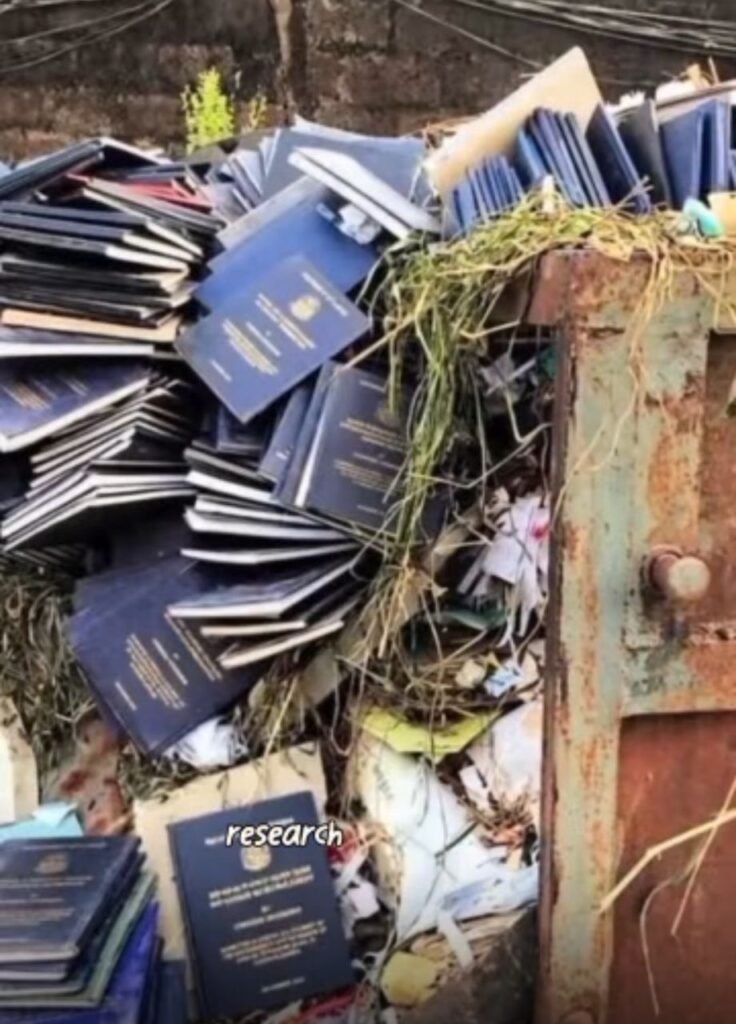
Every year in Nigeria, over 500,000 final year students submit projects and theses. Engineering designs for cheaper solar grids, agriculture studies on drought resistant crops, health research on local disease patterns, public policy proposals for traffic, waste, and water.
The ritual is predictable: 4 years of research. Months in the field. Thousands of naira on data, transport, printing, and binding. Then the defense ends, the book is graded, and 95% of them are never touched again.
Some gather dust in department libraries, many end up in dumpsters behind schools, torn, water-stained, or sun-bleached, the “waste” bin, becomes the graveyard of ideas.
Meanwhile, government agencies commission foreign consultants for the same problems, such as startups, reinventing wheels that were already drawn in a 2018 FUTA thesis among others. Local governments cry for solutions while the solutions rot 2km away on the same campus.
We didn’t lack research, we lacked a bridge between the research and the reality.
There is a special kind of tragedy in Nigeria, which is not the absence of ideas, it is the burial of ideas.
Walk behind any federal university and you will see it: stacks of bound projects, covers faded by rain, pages stuck together by harmattan dust, each one represents energy, time, and resources that someone bled for at a time. A student who stayed up nights, a supervisor who marked till his eyes hurt or a family that sold land to fund fieldwork.
Inside those papers are designs for low cost irrigation pumps, models for waste-to-energy conversion, algorithms for fixing traffic at Ojota and other places, not to talk of blueprints for primary healthcare in rural Ondo. Solutions to the exact “myriad of problems” we complain about daily on radio programmes, Twitter, Facebook WhatsApp groups and at town hall meetings.
But we preferred them in write-ups, then we archived them into irrelevance. We allowed climate, termites, and neglect to wear out the value before the value could wear out our problems.
This is not a student problem, it is a national design in a flaw.
We fund research, but not translation, we celebrate defense days, but not deployment days, we measure pages, and not impacts.
Imagine if every LGA had a “Solution Bank”, a team whose only job is to scan campus research and match it to local problems, imagine if ministries were forced to check the university dump before hiring a consultant from London, and just simply imagine if “picked up” meant more than “picked for distinction.”
The energy in those papers did not die, they were abandoned.
The time invested did not expire, they were simply ignored, so the resources spent did not waste themselves, we wasted them.
Until we build systems to rescue ideas from the dump site, we will keep writing problems in the morning and burying solutions at night, which also speaks to the dwindling reading culture currently, because they could have been picked up by young ones who are curious about the past and the future in the making.
Nigeria does not need 10,000 new ideas tomorrow, Nigeria needs to pick up the 2 million ideas it already wrote and threw away.
The future we want is not missing, it is just mouldering under rain and sun, waiting for us to reach into the dust and pull it out.
From Dump Site to Deployment: Rescue the Research, Rebuild the Nation.
Inside them: the answers to our power cuts, flooded roads, sick hospitals, and hungry farms. We wrote the solutions, then we threw them away.
Palace Pulse, Editor’s Desk
Photo Credit: Facebook
