
………“A grant to buy kulikuli ingredients is not a joke. It is seed capital that can feed a home and create dignity through work.” – Engr. Daniel Oke, LBW National Coordinator
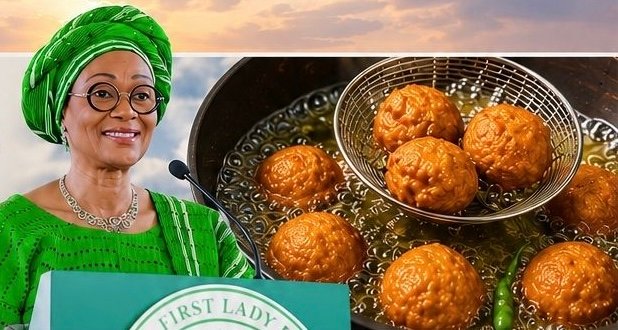
A statement by Nigeria’s First Lady, Senator Oluremi Tinubu, referencing micro-grants for low income earners to support small trades such as Akara, roasted corn, and kulikuli, has sparked heated debate across social media platforms.
While some critics dismissed the comment as out of touch, stakeholders on the ground say the conversation misses the real impact of targeted micro support at the household level.
Reacting to the backlash, the Lion of Bourdillon Waves, LBW, through its National Coordinator, Engr. Daniel Oke, said the gesture deserves commendation, not condemnation.
According to Engr. Oke, “For millions of Nigerian families, small capital is the difference between staying idle and starting something. A grant to buy kulikuli ingredients, roasted corn supplies, or Akara frying materials is not a joke. It is a seed capital that can feed a home, keep children in school, and create dignity through work.”
Economics is studied at different levels, moving from the smallest unit to the broadest. It starts with microeconomics, which looks at individual units like consumers, households, workers, and single businesses, focusing on things like pricing, supply and demand, consumer choice, and production. Above that is mesoeconomics, which examines groups within the economy such as specific industries like agriculture or banking, regions or local economies, and supply chains, with attention to industry competition, regional development, and sector performance.
Macroeconomics then takes in the entire national economy, covering GDP, inflation, unemployment, interest rates, government spending, taxation, and trade. Beyond the nation, international or global economics studies interactions between countries, including exchange rates, foreign investment, global financial markets, and economic integration. At the widest level is the global or world economy, which encompasses the combined economic activity of all countries and addresses topics like globalization, global supply chains, international financial stability, climate related economic impacts, and worldwide growth.
He noted that micro-interventions have historically lifted households from survival mode to stability, especially among women, widows, and youths in the informal sector. “We should be measuring policies by how many homes, such grants will put food on their table, not by how it trends online,” he added.
LBW applauded Senator Remi Tinubu for focusing attention on the informal economy, which employs the majority of Nigerians. The group described the initiative as a practical extension of the Renewed Hope Agenda’s commitment to poverty reduction and grassroots empowerment.
“The First Lady is speaking to the reality of the market woman, the roadside trader, and the home based entrepreneur. Those are the people who keep the economy moving daily,” Engr. Oke stated.
Economic analysts and community leaders have repeatedly argued that Nigeria’s economy’s recovery will be driven from the bottom up. Small grants, when properly disbursed and monitored, reduce dependency, stimulate local commerce, and strengthen household resilience against inflation.
LBW urged government agencies and civil societies to ensure transparency in the selection and disbursement process, so that the intended beneficiaries will receive the support, without bureaucratic or political interference.
While the social media reaction has been so loud, LBW maintains that the substance of the First Lady’s message is valid. “Akara, roasted corn, kulikuli, these are not small businesses to the mothers and youths who depend on them. With the right support, they become pathways out of poverty,” Engr. Oke concluded.
