
BY
BABAFEMI DANIEL OKE
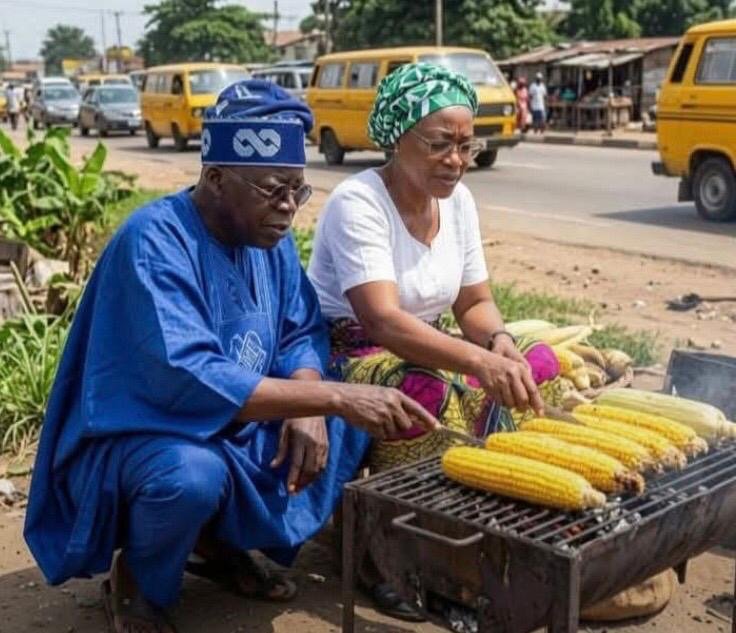
One of the biggest mistakes in Nigerian politics is assuming that everyone lives in the same economic reality.
They don’t.
The debate over Senator Oluremi Tinubu’s comments about akara and kuli-kuli exposed something deeper than politics. It exposed a disconnect between many middle-class commentators and the daily realities of millions of Nigerians.
To someone earning a salary every month, ₦50,000 may look insignificant.
To a widow selling akara, roasted yam, boiled corn, kuli-kuli or cashew nuts, ₦50,000 can be working capital. It is the difference between buying today’s stock with borrowed money and buying it outright. It is the difference between surviving and expanding.
Years ago, I personally experienced this.
I gave five widows ₦30,000 each to buy cashew nuts. They repackaged them into smaller bottles and sachets for resale. Within three months, every one of them had repaid the money. We then revolved the same capital to another five women.
That small intervention did not create software engineers. It created sustainable micro-businesses.
That is the point many critics miss.
Not every Nigerian needs a laptop before they can be economically productive. Nigeria’s economy is layered. A graduate may benefit from digital skills and technology. A market woman may benefit more from affordable working capital. A roadside food vendor may simply need enough money to increase inventory.
As food prices have risen, another trend has emerged. Demand for lower-cost prepared foods such as roasted yam, akara, bread-and-akara (“akara burger”wink, boiled maize and similar street foods has increased in many communities because they remain relatively affordable. That, in turn, has created opportunities for thousands of small traders operating with modest capital.
This is not an argument against technology or digital empowerment.
It is an argument against one-size-fits-all thinking.
Successful social policy recognises that poverty is not uniform. The needs of a graduate seeking employment are different from those of a widow selling vegetables, or a hawker financing her daily stock on credit.
Politics is ultimately about understanding people where they are, not where we wish they were.
If the opposition wants to become electorally competitive, it must spend more time listening in markets than arguing on social media.
The grassroots are not asking politicians to solve every problem overnight. Many are asking for something much simpler: enough capital to take the next step.
Sometimes, the journey out of poverty does not begin with millions of naira.
Sometimes, it begins with one basin of akara.
