
The official match ball for the 2026 FIFA World Cup, the Adidas Trionda, is equipped with FIFA’s Connected Ball Technology. Contrary to viral claims, it is not “a mini computer that does everything alone”, but it is a major leap in officiating accuracy.
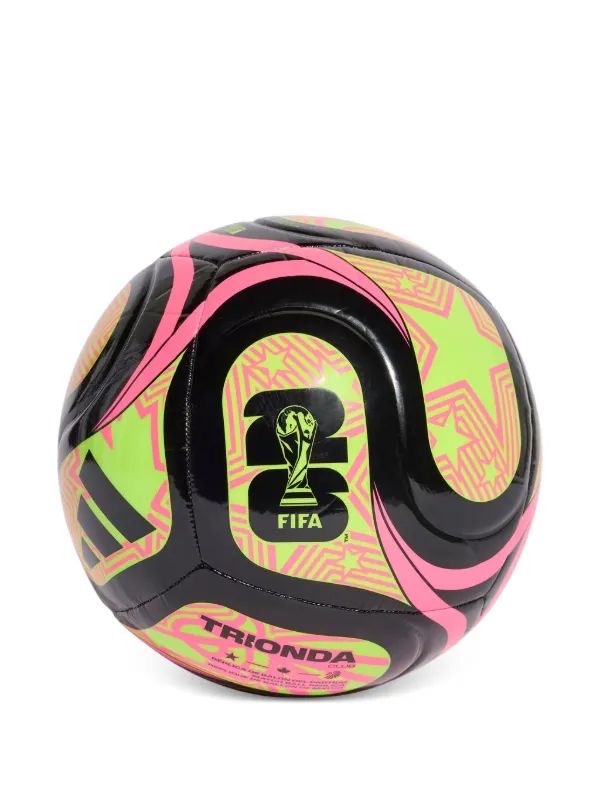
Empirical Facts: of this innovation includes the following:
Charging & Battery: The Trionda contains a rechargeable IMU sensor. Each ball is charged before matches, providing 6 hours of operational capacity sufficient for regulation and extra time.
Sensor Specs: The ball houses a 14g inertial measurement unit that transmits motion data 500 times per second, 500Hz. This tech was first used in Qatar 2022’s Al Rihla ball.
What It Tracks: The sensor records speed, spin rate, trajectory, contact points, and the exact millisecond of ball interaction. This data streams live to the VAR system.
Role in Officiating: The ball does NOT track player positions or call offside by itself. It provides a high-precision timestamp of ball contact. That timestamp triggers FIFA’s Semi-Automated Offside Technology, which combines ball data with 12 tracking cameras capturing 29 body points per player to generate 3D offside recommendations for VAR review.
Impact: This system cut average offside decision time from 70 seconds under traditional VAR to 25–30 seconds at Qatar 2022. It also improves handball and marginal contact decisions.
Design Upgrade: Unlike 2022, the Trionda’s sensor is side mounted within the ball instead of suspended centrally, improving balance and flight stability.
The 2026 World Cup ball is indeed “charged like a smartphone” and is a data powerhouse. But accuracy comes from the ball + cameras + AI working as one system, not the ball alone. Football has entered a measured, data-driven era, with the Trionda as its core input device.
Sources: FIFA/ABP Live, Daily Sabah, Adidas documentation via SportsCasting, June 2026
