
By Emmanuel Oriowo
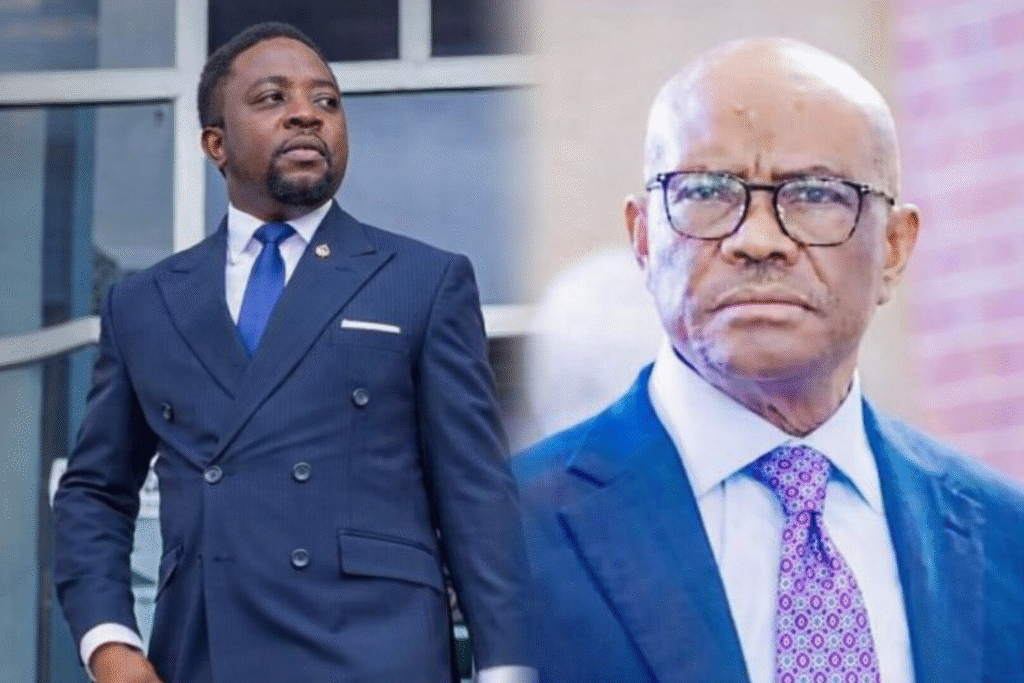
A recent exchange between Seun Okinbaloye of Channels Television and the Minister of the Federal Capital Territory, Nyesom Wike, has ignited a nationwide conversation about the boundaries of political expression, media responsibility, and the safety of journalists in Nigeria’s evolving democratic space.
The controversy, which followed remarks made during a media parley in Abuja, reflects a broader tension between public officials and the press, particularly as political activities begin to gather momentum ahead of the 2027 elections.
The Flashpoint
The issue began after Okinbaloye, while anchoring Politics Today, raised concerns about the implications of a weakening opposition and the potential drift toward a one party dominance in Nigeria’s political system. His comments, framed as a cautionary observation, drew a sharp response from Wike.
Reacting during a media interaction, the minister expressed strong disapproval, stating that he was “shocked” by the journalist’s position and, in a controversial remark, suggested that “if there was any way to break the screen, I would have shot him.”
Though later clarified as hyperbolic and not intended as a literal threat, the comment quickly drew criticism from media stakeholders and civil society groups.
Okinbaloye’s Response: Standing Ground
Addressing the issue on his programme Sunday Politics, Okinbaloye maintained a firm, but measured stance, asserting that he would not be intimidated.
“I’m not afraid, and I will never be intimidated,” he said, while expressing gratitude for the outpouring of support from viewers, civil society organisations, and professional bodies.
He emphasized that his remarks were not targeted at any political group, but were instead a broader reflection on democratic principles and national development.
“Our democracy is in danger if we allow one way traffic in balloting,” he noted, warning against the suppression of dissenting voices.
Importantly, the journalist disclosed that he had received reassurances from security agencies regarding his safety and confirmed that Wike had personally reached out to clarify his earlier statement.
Wike’s Clarification: Context and Intent
In response to the backlash, Wike, through his aides and subsequent communication, explained that his comment was made in a figurative, “hyperbolic” context, driven by frustration over what he perceived as a departure from journalistic neutrality.
His camp argued that the minister was reacting to what he saw as political commentary rather than objective moderation, insisting there was no intention to threaten or intimidate.
This clarification, however, has not fully quelled public concern, as critics argue that words from public officials carry weight regardless of intent.
Reactions from Stakeholders
The incident has drawn varied responses across the media and civil society landscape.
Amnesty International Nigeria strongly condemned the remark, describing it as “reckless and violent,” and warning that such rhetoric could endanger journalists and embolden attacks on the press.
Similarly, the Independent Broadcasters Association of Nigeria (IBAN) called for a public apology from the minister, cautioning that failure to do so could result in a boycott of his media engagements.
These reactions highlight growing concerns about the tone of political discourse and its potential implications for press freedom and public safety.
The Broader Issue: Press Freedom vs Political Sensitivity
At the heart of the controversy, lies a fundamental democratic question:
Where should the line be drawn between robust political criticism and responsible journalism?
For many observers, Okinbaloye’s comments fall within the legitimate duty of journalists to question power and stimulate public debate. Others, however, argue that journalists must remain cautious not to blur the line between analysis and advocacy.
On the other hand, public officials are expected to uphold decorum and avoid language that could be perceived as threatening, particularly in a country where concerns about media safety remain significant.
A Democracy Under Watch
The Okinbaloye and Wike episode underscores the delicate balance required in a democratic society, where free speech, accountability, and mutual respect must coexist.
While the minister’s clarification suggests no intent to harm, the strong reactions it provoked reveal a deeper sensitivity around issues of press freedom and political rhetoric in Nigeria.
For the media, it reinforces the importance of professionalism and courage. For public officials, it serves as a reminder that rhetoric, whether literal or figurative, can have far reaching consequences.
My Conclusion
As Nigeria approaches another electoral cycle, this incident offers a timely reflection on the state of its democracy.
A vibrant democracy depends not only on strong institutions, but also on responsible communication, by both those who hold power and those who question it.
In the end, the ongoing discourse may prove beneficial, prompting a necessary recalibration of how power and the press engage in shaping Nigeria’s democratic future.
