
What was once a vibrant waterside settlement in Lagos, Makoko is now a landscape of rubble, silence, and fear.
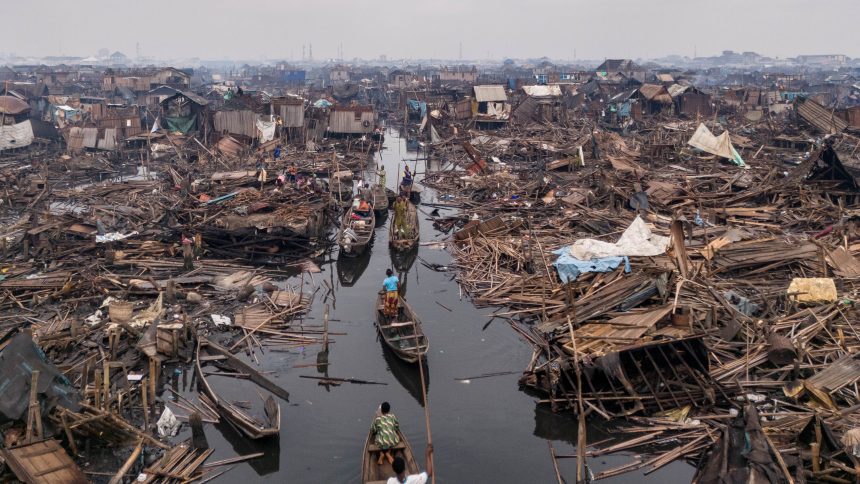
This is the fallout of ongoing demolition of structures in the community, one of Lagos’ oldest riverine communities, an exercise carried out by the Lagos State Government which has displaced thousands of residents, women, children, fishermen, traders, and artisans.
Homes, schools, markets, churches, mosques, and livelihoods in Makoko have been wiped out, leaving families with nowhere to go and no clear future in sight.
For more than a century, Makoko has been home to vulnerable population of Nigerians who know no other place to call their own.
Here, life revolves around the lagoon… fishing, trading, learning, worshipping, all woven into a unique way of living on water.
But since December 21, 2025, that way of life has been under threat.
Residents say they were initially told to move 30 metres away from power lines, a directive their community leaders accepted.
That distance later changed to 100 metres, and the community says it cooperated fully, helping officials measure the setback and even planting Nigerian flags to mark the agreed boundaries.
Yet, the demolitions went far beyond those limits.
Today, schools lie in ruins, markets have vanished, hospitals are gone, and children have not returned to classrooms since the new school term began.
Church bells no longer ring, mosques stand destroyed, and fear has forced families including babies and the elderly to sleep in canoes on the water.
Ayinde Tosin is a resident and school owner in Makoko. To him and other affected residents, their lives have been torn apart and government’s support to help them rebuild their lives is paramount.
Civil society groups who distributed relief materials to some affected families,
describe the scene as one of total devastation. For women and children, the impact is especially severe.
Executive Director, Health of Mother Earth Foundation, Nnimmo Bassey, says what is unfolding raises serious human rights and environmental concerns. While CEE-HOPE’s Executive Director, Betty Abbah, describes the exercise as one that has created widespread trauma and hopelessness for the people.
Beyond housing, concerns are also growing about environmental damage.
Activists warn that sand-filling near the lagoon threatens fish stocks, biodiversity, and climate resilience in a city already vulnerable to rising sea levels.
Makoko’s floating homes, they argue, should have been improved not erased as an example of climate adaptation.
Residents are now appealing to the Lagos State Government to halt the demolitions, provide alternative accommodation,and compensate victims.
For them, this is not just about structures, it is about dignity, justice, and the right to call somewhere home.
Efforts to reach the Lagos State Government on the issue were unsuccessful.
AIT
