
In Akure, politics is never just about party colors it is about history, fairness, and who truly understands the people.
From Oba-Ile to Iju, from Isinkan to Oda Road communities, one conversation is growing louder as the race for the House of Representatives for Akure North and South Federal Constituency approaches: has Akure North waited long enough?
For many residents and party stakeholders, the answer is a resounding yes.
Akure North, despite its size and electoral strength, has for years remained politically sidelined in the sharing of key representative positions within the constituency.
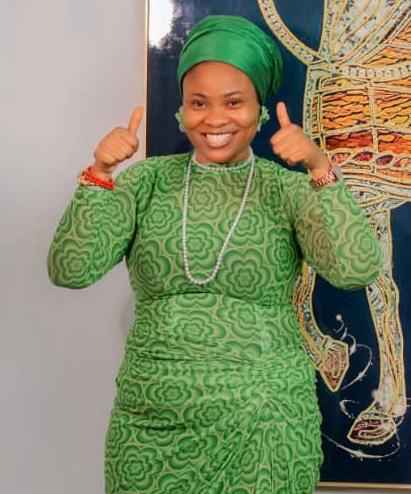
This lingering imbalance has fueled renewed calls for equity and at the center of this conversation is Hon. Tomisin Edu Falade, a proud indigene of Akure North whose political relevance continues to expand.
“Akure North has paid its dues,” said a senior APC chieftain in Akure who asked not to be named. “We cannot continue to talk about justice and inclusion while one side of the constituency keeps taking the slot.
This is about fairness, not sentiment.”
What has made Falade’s name resonate beyond zoning arguments is her record of service, largely achieved without holding elective office.
Across Akure communities, beneficiaries quietly recount how she has facilitated federal and state job placements for young people, helped families gain access to opportunities, and consistently used her connections to open doors that were previously shut.
A youth leader from Oba-Ile described her impact plainly:
“Many politicians only remember us during elections. She has been there even when nothing was at stake. People are working today because she spoke for them.”
Within party circles in Akure South, Falade is often described as “highly connected” and “strategic.” Multiple insiders point to her influence within key power blocs, noting that she understands how governance works beyond campaign slogans.
“She knows how to navigate the corridors of power,” another APC insider noted. “Representation today is not just about shouting on the floor of the House, it’s about who can actually deliver results for Akure.”
Her leadership profile also feeds into a broader national and party conversation: women’s representation.
Despite women forming a significant portion of the electorate in Ondo State, their presence in legislative offices remains disproportionately low.
Supporters argue that Hon. Falade’s capacity and track record makes a compelling case, that competence and not gender should be the deciding factor and that speaks to her strength, in the scheme of things.
Under the APC’s manifesto, commitment to inclusive governance and equal opportunity, remains a hallmark. Many see her emergence as aligning naturally with the party’s stated ideals no doubt and the reason for her growing support for a quality representation.
A women leader from Isinkan puts it succinctly:
“We are not asking for favours because she is a woman. We are saying: look at what she has done already. If this is what she can do without office, imagine what she can do with our mandate.”
Those close to Falade often point out that leadership has been a constant theme in her journey, long before the current political moment.
From organizing community initiatives to acting as a bridge between constituents and government institutions, her style has been consistent: visible, accessible, and results driven projects.
As Akure North and South weigh their future representation, the debate surrounding Hon. Tomisin Edu Falade reflects a deeper desire among voters, for fairness to Akure North, for effective advocacy, and for leadership that mirrors the diversity and aspirations of the constituency.
In a political climate where trust is earned through action, many in Akure are asking whether the time has finally come to reward consistency, inclusion, and proven influence.
