
By Zadok Akintoye (Analysis)
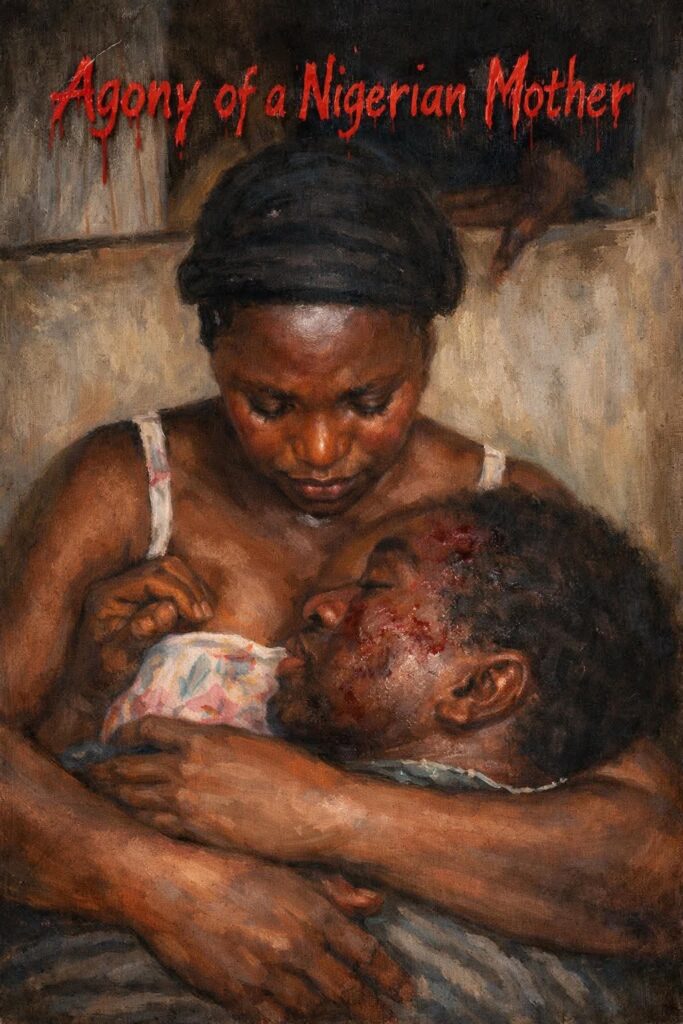
A haunting image, now widely circulated, captures a mother cradling her bloodied child, her face bowed not just in grief in the viral video.
But in resignation, to a helpless situation and loss of hope, like every other citizen?
It is a portrait that tells a deeper story than words can fully contain: the enduring tragedy of insecurity in Nigeria, and the growing frustration of citizens who feel abandoned by those entrusted with their protection.
The latest wave of violence in Jos, Plateau State, has once again exposed the fragile underbelly of our national security. Reports of attacks, loss of innocent lives, and displacement of families has reignited a familiar question: What is the true meaning of leadership, when the people remain unsafe?
A Crisis Beyond Statistics, while official statements often try to douse or reduce such tensions by the tragedies, to just numbers, casualties, arrests, deployments and the human reality, which is far more devastating. Each figure represents a story abruptly cut short, a family thrown into mourning, and a community pushed further into palpable fear.
The image titled “Agony of a Nigerian Mother” has become symbolic, of our current reality. It reflects not only personal loss, but also a collective wound, for a nation grappling with repeated failures, to protect itself and its most vulnerable citizens, with the situation as we speak.
The Burden of Leadership, is raging, and at the heart of the public outrage, lies a constitutional expectation: that government exists primarily for the welfare and security of its people. When citizens begin to question this fundamental duty, it signals more than dissatisfaction, it points to a crisis of trust.
Zadok Akintoye, in his analysis, argues that leadership is not defined by titles or ceremonial prestige, but by the ability to safeguard lives. According to him, “a state that cannot guarantee safety gradually loses its moral authority, no matter how strong its institutions appear on paper.”
This growing sentiment is echoed across social and political spaces, where citizens are increasingly critical of what they describe as reactive, rather than proactive governance.
The “Mandate” Debate, which has now become a popular phrase “on your mandate” has become a recurring refrain in many political discourse, often used to defend or justify leadership decisions. However, critics argue that such loyalty should never override accountability and the security of lives and property, as stipulated in our constitution.
Akintoye notes that blind allegiance, especially in the face of recurring tragedies, risks normalizing failure. “When conscience is replaced with partisanship,” he writes, “society drifts dangerously close to accepting the unacceptable.”
Out Cultural Metaphors, comes with Deeper Meanings, the strong language circulating in public spaces, comparing ineffective leadership to powerless deities or symbolic figures like Sigidi, is not merely rhetorical that will normally flourish. It reflects deep cultural frustration, where traditional metaphors are used to express disillusionment with the authority that appears present, but ineffective.
Such expressions, though sharp, underlines a broader demand: leadership that is not just visible, but functional.
With a Nation at its Crossroads, the events in Jos are not isolated. They are part of a recurring pattern that continues to test the resilience of communities and the credibility of institutions and our governments at all levels.
For many Nigerians, the question is no longer whether violence will occur, but when, where and how devastating it will be.
Akintoye concludes with a sobering reflection: “History does not remember promises; it remembers outcomes. And in the end, the measure of any administration will not be in speeches made, but in lives protected.”
Zadok Akintoye, in “Way Forward” suggestion asserted that, Security experts have repeatedly emphasized the need for:
• Strengthened intelligence gathering
• Community-based security collaboration
• Swift justice for perpetrators
• Transparent communication from government among others, yet beyond policy prescriptions lies a more fundamental need:
- Restoring public trust.
As the image of a grieving mother continues to circulate, it serves as a silent, but powerful indictment and a reminder that behind every policy failure, is a human cost too great to ignore, especially when so many lives are involved.
Zadok Akintoye pens down tonight in total disappointment of this latest development, upon the severity of the situation and the long cries of mothers alike, who are still grieving and mourning and are clueless about their healing process or pattern.
Now, the big question is, where’s next?
Zadok Akintoye
(Public Affairs Analyst).
30th March, 2026.
